Our contributor, Summer Stone, is here to share some insight on how fat affects our cake recipes…
I fully admit I am a bit of a butter fanatic. I love nothing more than a kitchen filled with the heady aroma of baked goods loaded with the golden richness of sweet cream butter. But the scientist in me demands that I keep an open mind when evaluating which kind of fat leads to the best cake. Fat in cake plays a diverse set roles; it provides moistness, aeration (leavening), flavor, texture and tenderness. The problem with determining which type of fat qualifies as the cake-fat champion is that different fats affect different characteristics of the cake. Butter is known for its flavor profile, oil for moisture provision, shortening for aeration and margarine a combination of attributes.
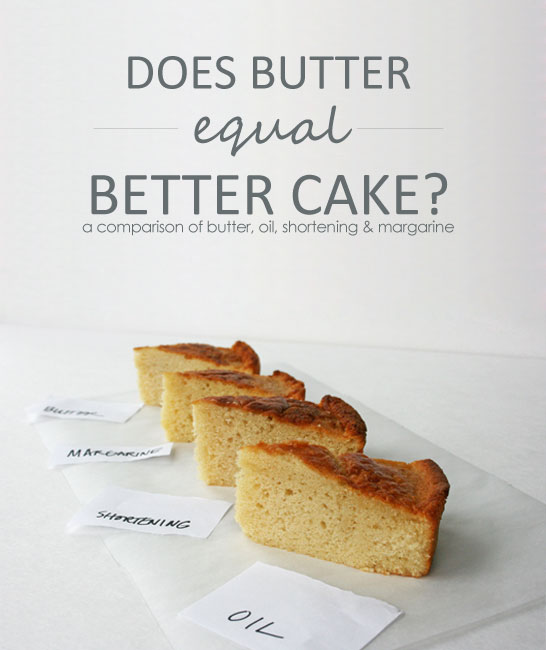
In order to get a handle on how varied fats alter cake properties, I baked a vanilla cake recipe varying only the type of fat used. The fats included butter, canola oil, shortening and stick-type margarine. Here is what I discovered about using different fats in this cake.
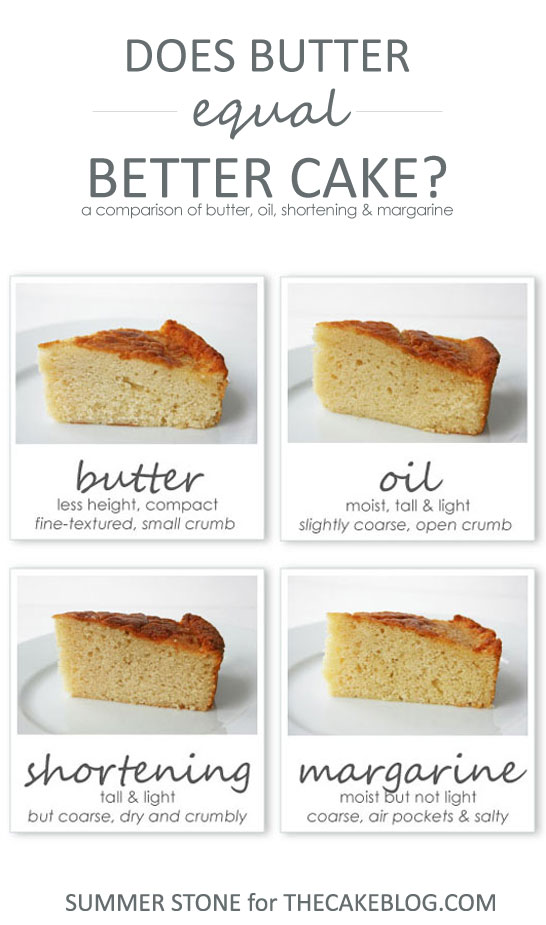
BUTTER:
Being slightly butter prejudiced, I expected the butter cake to be the flavor standout. What I found was that the flavor of the butter was difficult to detect even when compared directly to the other cakes. I think if these cakes were laden with buttercream the subtle differences would be even less distinguishable. The value of the butter came in its ability to create a beautifully fine-textured cake. The small crumb size was noticeable when compared to the more open crumb of all of the other cakes. This compact crumb does lead to a cake that has less height than the others, but even so, it did not seem overly dense.
OIL:
I was pleasantly surprised by the oil cake. I expected it to be moist, which it was; the oil cake was definitely the moistest of all of the cakes. But what I found interesting was that the oil cake was as tall and light as the shortening cake. I had expected the oil cake to be more short and dense since oil doesn’t hold air pockets as well as butter or shortening, but this was not the case. This cake did have a slightly coarser, more open crumb than the butter cake but the texture was by no means unpleasant. I also expected the oil cake to taste flat, yet it had a pleasant neutral vanilla flavor that tasted quite similar to the butter cake.
SHORTENING:
The shortening cake was by far my least favorite. While the cake was tall and light in density, the texture was coarse, dry and crumbly. The flavor was fine, but the texture was so unappealing that any favorable characteristics were overshadowed.
MARGARINE:
Truthfully, I expected the margarine cake to be awful. But it wasn’t as bad as I had envisioned. The margarine cake was nearly as moist as the oil cake though it did not have the same light texture. It was also coarser than the oil and butter cakes and possessed more air pockets. The salt present in the margarine made the cake a bit too salty, but overall the cake was decent on most fronts. I would not say this cake was bad, but neither would I say it was great.
I am not willing to give up lovely, creamy butter in my cakes but the results of these tests inspire me to replace some of the butter with oil in the future. I don’t have to fear that the oil will adversely affect the taste of the cake and the benefit of moistness is highly desirable.
Take a look at your cake recipe today and perhaps give another fat a chance.


Interesting article. Many years ago, I took my aunt’s chocolate cake recipe, and, not know that there were different kinds of shortening, used vegetable oil in place of the “shortening.” The cake was a disaster. I have used Crisco and / or butter in my cakes since then.
エルバーキンコピーエルメスバーキン30コピーエルメス ボリード47,エルメス バッグ 名前,エルメス ネクタイ ピンク エルメス クラッチバッグ,エルメス バッグ コピー,エルメス バーキン コピー エルメス 財布 ダミエ オークション,エルメス ヨーロッパ,エルメス エールライン エルメス クラッチ激安通販、高い品質、送料無料。バーキン25コピー、バーキン30コピー、バーキン35コピー、バーキン40コピーなど世界中有名なブランドレプリカを格安で通販しております。N級品スーパーコピーブランドは ブランドスーパーコピー超N品エルメスバッグ,エルメス バーキン25 , バーキン30.バーキン35.バーキン40. エルメス(HERMES) ケリー https://www.okakaku.com/brand-2-copy-0.html
ロレックスコピー販売、代引きロレックス時計コピー通販、全て新品、高い品質、激安、送料無料。ロレックス時計コピーなど世界中有名なブランドレプリカを格安で通販しております。N級品スーパーコピーブランドは 業界で最高な品質に挑戦しますロレックコピー,ロレックコピー代引き,ロレック激安,ロレックス偽物 ,最高級ロレックコピーロレックス時計コピー,フェラーリコピー時計,パネライコピー時計,パテックフィリップコピー時計,ヴァシュロン.コンスタンタンコピー時計,エルメスコピー時計,カルティエコピー時計ルイヴィトンコピー、 ロレックスコピー、シャネルコピー、グッチコピー、エルメスコピー、 ボッテガヴェネタコピー、 バーバリーコピー、ミュウミュウコピー、トリーバーチコピー、バレンシアガコピー、ディオールコピー、ブルガリコピー、ブラダコピー、 ドルチェ&ガッバーナコピー、オメガコピー、フランク ミュラーコピー、gagaコピー。古驰拷贝, 靴/サンダル,サングラスコピー欧米O級品オーダー服各種のブランドの服、靴、、財布、腕時計の複製品をかばん一番ブランドliveブランドコピー服,ブランドバッグコピー,ブランド時計,ブランド靴シリーズ欧米O級品コーナーラッピング用品 https://www.bagkakaku.com/chanel_bag.html
2015年の新素材-新作!高品質 腕時計高品質の追求 超N品を良心価格で提供詳しくは以下のようなブランドがあります。HERMES(バッグ、財布、時計) CHANEL(バッグ、財布、時計)LOUIS VUITTON(バッグ、小物、財布、時計) BVLGARI(財布、時計)Christian Dior(バッグ、財布) COACH(バッグ、財布)GUCCI(バッグ、財布) ROLEX(時計)OMEGA(時計) IWC(時計)FRANCK MULLER(時計) HUBLOT(時計)クロエ CHLOE バッグなどです。ご不明点が ございましたらお気軽にお問い合わせください https://www.brandiwc.com/brand-62-copy-0.html
スーパーコピー時計専売店当店は海外安心と信頼のスーパーコピーブライトリング、代引き店です.正規品と同等品質のシャネル コピー代引き,品質が秀逸,値段が激安!ブライトリングコピー,代引きなどの商品や情報が満載!全商品写真は100%実物撮影です! お客様の満足度は業界No.1です!スーパーコピー時計,時計コピー ,ブランド時計コピー販売(n級品)店舗 ブランド腕時計(ロレックス,ブライトリング,タグホイヤー,オメガ,ガガミラノなど)の最新 情報やイベントを紹介する正規販売店と腕時計コピーの専門サイトです。当店はロレックスやパテックフィリップなどの新品スーパーコピー時計の販売と。 https://www.okakaku.com/brand-23-copy-0.html
財布コピー、バッグコピー、腕時計コピー、ベルトコピー靴コピーネックレスコピー、手帳コピー、小物コピー、SS品、N品、価格激安、品質の保証,2015人気ブランド偽物,歓迎光臨楽天★送料無料(日本全国)典雅気質!シャネルバッグCHH67723(*^^*)11月シャネル手作り新作(*^^*)時流の先端快適美品!シャネルブーツCH783283四季向け「 シャネル靴」最高な選択!ブランドコピー 代引きコピーブランド 代引きスーパーコピー 代引きスーパーコピーブランドバッグルイヴィトン コピーシャネル コピー https://www.newkakaku.com/lz1.htm
スーパーコピー、スーパーコピーブランド(N級品)激安通販専門店世界一流ブランドコピー 財布、スーパーコピー 商品、激安ブランドコピー 。 ヴィトンコピー 、 ミョウミョウコピー 、シャネルコピー 、エル メスコピー 品格安通販。商品は全て最高な材料 と優れた技術で造られて、正規と比べて、品質が無差別です!人気ブランド.. https://www.gginza.com/watch/rolex/index.html
100%実物写真ですし、品質が完璧です!”スーパーコピーブランド財布激安 偽物財布激安コピー ルイヴィトン財布偽物,偽物財布コピーエルバーキンコピースーパーコピー財布ブランド財布コピーブランドコピー激安バレンシアガ スーパーコピー激安ロレックス スーパーコピー時計ブランド財布激安 偽物財布激安コピー ルイヴィトン財布偽物,偽物財布コピーブランド激安市場-jck35販売:ブランド財布コピー,激安ブランド,財布コピー,偽ブランド,偽 ブランド財布,偽物ブランド財布,ブランドコピー,ヴィトンコピー,ルイヴィトン財布偽物, シャネル財布コピー,グッチ財布コピー,エルメス財布偽物,D&G 財布コピー,ボッテガ 財布 .2013年新作スーパーコピーロレックス,スーパーコピーロレックス時計通販スーパー コピー品その他の世界一流ロレックススーパーコピー時計品を扱っています。 ホームページをクリックして商品をご覧下さい.ロレックスコピー,業界No.1人気スーパーコピーロレックス腕時計専門販売ロレックスコピー(ROLEXスーパーコピー)のロレックス レプリカ販売専門店です。すべての商品は品質2年無料保証です,ロレックス デイトジャスト 偽物,人気満点ロレックス コピーn級品新作大特集 https://www.wtobrand.com/pr1.html
業界最高峰のブランドコピー 激安、コピーブランド、スーパーコピーブランド(N級品)通販専門店!ブランドコピー,コピーブランド,スーパーコピーブランド,ブランドコピー 激安,偽物ブランド、偽物のバッグ、腕時計、財布など激安で買える!全部のスーパーコピー販売品物のなかで私達のブランド激安が一番有名です https://www.newkakaku.net/co.htm
エルバーキンコピーエルメスバーキン30コピーエルメス ボリード47,エルメス バッグ 名前,エルメス ネクタイ ピンク エルメス クラッチバッグ,エルメス バッグ コピー,エルメス バーキン コピー エルメス 財布 ダミエ オークション,エルメス ヨーロッパ,エルメス エールライン エルメス クラッチ激安通販、高い品質、送料無料。バーキン25コピー、バーキン30コピー、バーキン35コピー、バーキン40コピーなど世界中有名なブランドレプリカを格安で通販しております。N級品スーパーコピーブランドは ブランドスーパーコピー超N品エルメスバッグ,エルメス バーキン25 , バーキン30.バーキン35.バーキン40. エルメス(HERMES) ケリー https://www.ooowatch.com/tokei/vuitton/index.html
最も美しいスーパーコピー,超格安ブランド時計コピー激安通販専門店!ブランド品に憧れて、予算オーバーし、諦めなければならないことがありましたか。スーパーコピー品が一番いいチョイスだ思います。少しのお金でも、世界中一番人気を持つブランド品、貴族しか買えない贅沢品がゲットできます。素敵な外観と実用性に優れたブランド コピー バッグ,,スーパーコピー財布,スーパーコピー 代引き,エルメス コピー,ルイヴィトン 財布、ルイヴィトン バッグ、ベルトなどの逸品はお客様に提供します。誰でもブランド品を手に入れられるのは弊社の経営理念です。当店の最大目標はお客様が安心してお買い物が出来き、お客様の頼りになるお店を目指す事ことです。お洒落な貴方はきっとこのチャンスを見逃しなくよ! https://www.gowatchs.com/brand-243.html
高品質2015シャネル スーパーコピー激安專門店弊社は海外大好評を博くシャネル コピー激安老舗です,2015高品質シャネル バッグ コピー,シャネル 靴 コピー,シャネル 財布 コピー品の品質はよくて、激安の大特価でご提供します。 https://www.eevance.com/index.html
I’d be interested to see you repeat this test with lard (which is animal fat and has a different ratio of types of fats than what people usually call “shortening” — typically coconut or palm fat).
I’d also like to see a more naturally-extracted coconut or palm oil compared with the shortening, to see how much the processing comes to bear on the final product.
Does anyone can publish a cake recipe with half butter and half oil and how to mix these? Thank you.
Here is what I found when looking for a half oil, half butter recipe for cupcakes. I think I might try these tomorrow.
https://bakingisascienceblog.blogspot.com/2013/08/vanilla-cupcakes-great-butter-vs-oil.html?m=1
Thanks julie,I will try
Have you tried lard or beef tallow (animal shortening type ) to see how it works in cakes?
Is the oil & butter substitution ratio 1:1?
Great tips!! This gives a particular source of differentiation between the quantum of shortening, butter, margarine and oil. I usually prefer cakes loaded and enriched with butter as they are just yum!!!!
I like to homogenize the oil in a food processor. I place my sugar and eggs in a food processor. Pulse a few times that turn it on. Then slowly add the oil through the feed shoot
https://androidhacksenergy.com/unison-league-hack/
Great article! This is actually something I learned over years of baking. I find that most people don’t really like buttercream frosting here in Europe and everyone seems to love whipped cream or mascarpone based frostings with fruit fillings etc… and cakes like this really HAVE to be refrigerated. When I use all butter cake, the cake part becomes really hard as it’s cool, which is normal = butter when cold is hard. That’s why I use a good amount of light olive or sunflower oil in my cakes along with butter and it really makes a huuuge difference! You should really try my recipe for basic vanilla cake or cupcakes (I use it for both and works great!).
170 g cake flour
1 + 1/4 tsp baking powder
1/4 tsp salt
80 g butter, soft
40 g light olive, sunflower or canola oil
150 g sugar
2 eggs (about 55 g each)
1 tsp vanilla (extract or paste, whatever you prefer)
120 g whole milk
Just sift together all the dry ingredients (flour, baking powder and salt), whisk em togehtehr and set aside. In a large bowl or in the bowl of a stand mixer cream together butter, oil and sugar for about 3 minutes, until pale and fluffy. Add your eggs (one at a time) and vanilla and mix everything. Also at this point don’t forget to scrape down the sides and bottom of the bowl, so everything mixes evenly. Finally, add your dry in 3 parts alternating with the milk in 2 parts. Mix on low speed until just combined, do not overmix! This makes about 12 cupcakes or one 9-inch round cake which can be splited in half. I usually double the ingredients, divide the batter between 2 x 9 inch pans so later I have 4 thin layers when the cakes are splited. This really is my go-to vanilla cake/cupcake recipe, it’s moist, buttery and still quite soft even after refrigerating!
So if anyone asks me whats my secret to a perfect cake, I say the combinatiion of butter and oil!
I have been baking anything that I can find online from the Great British Bake-Off. Most of my cakes and bread come out somewhat dry and do not last well past a day or two (they become even dryer.) All the recipes that I have used so far, call for butter. I was wondering if I could split the difference and use a combination of butter and oil? If you could let me know, I would greatly appreciate it. Thanks so much.
To BBBAKER, thanks for sharing you butter/oil vanilla cake which I will make soon. I will let you know how it turns out. Also, for those that want to know how to replace some butter with oil in cake recipes, I use this formula. First, I would start with 1/4th of the butter. So if recipe asks for 2 sticks of butter (about 226 grams), I would take out 1/4 stick butter (4 tbsp or 2 oz or about 56.5 grams) butter and replace it with 80% oil (vegetable or corn or canola…) and 20% milk. So 56.5 grams butter = 45.2 grams oil plus 11.3 grams milk. This formula is based on the fact that butter is 80% fat and 20% milk while oil is 100% fat. Obviously, for this to be most accurate, you need a scale. I have a digital scale. But I know that many of us who live in the US do not have scales. Also, I do agree that cakes with oil are so much more moist and lighter than cakes with butter; but the downside is that butter gives more flavor to the cake, so I recommend that when you use an oil based cake to maybe increase the amount of vanilla extract and/or add some orange/lemon/lime zest. But this all depends on the type of cake you are making.
Very interesting! I cannot bring myself to use margarine or shortening but recently did make
a yellow /vanilla cake that used oil instead of butter and it was quite nice.
Here’s the ratio of swapping oil for butter or vice-versa
50 grams of BUTTER with 40 grams of OIL
80 grams of BUTTER with 64 grams of OIL
100 grams of BUTTER with 80 grams of OIL
120 grams of BUTTER with 96 grams of OIL
150 grams of BUTTER with 120 grams of OIL
180 grams of BUTTER with 144 grams of OIL
200 grams of BUTTER with 160 grams of OIL
220 grams of BUTTER with 176 grams of OIL
250 grams of BUTTER with 200 grams of OIL